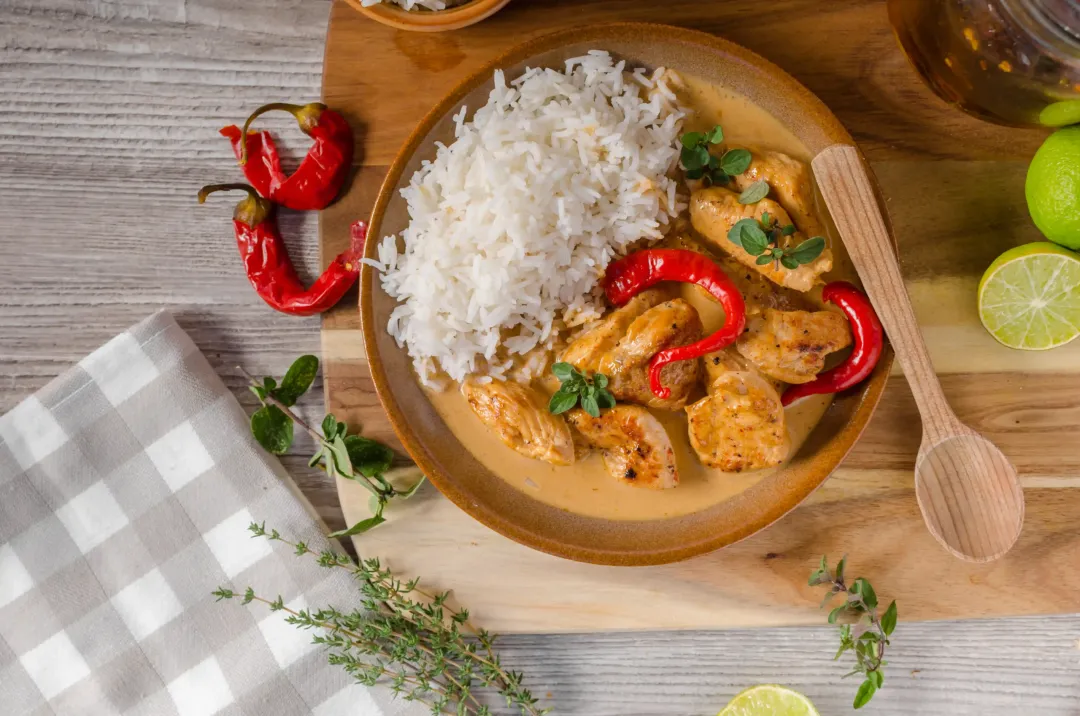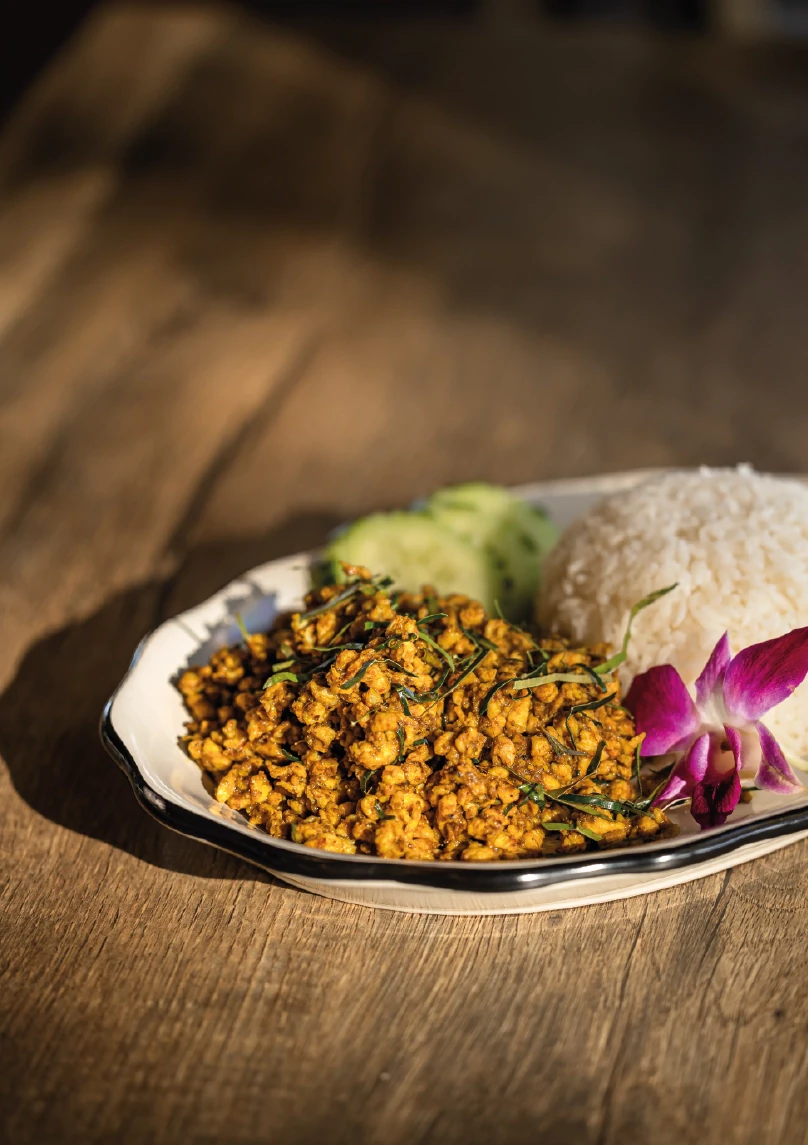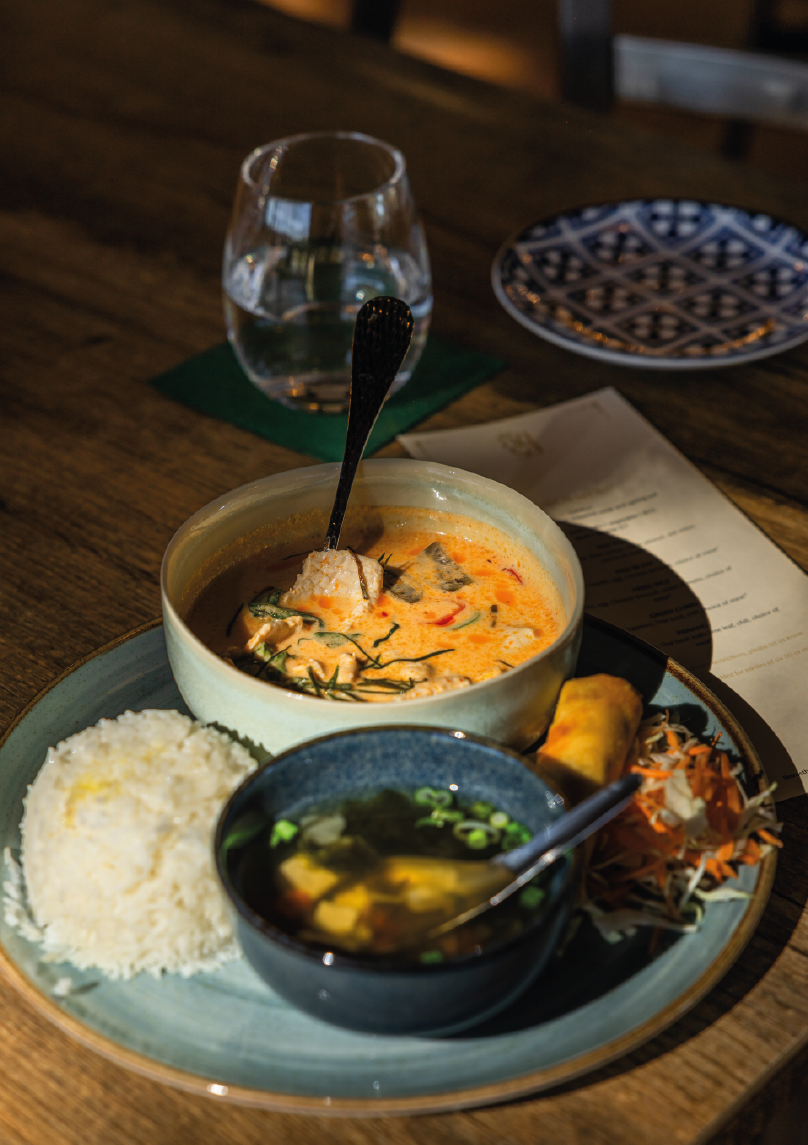

Thai chicken curry is a popular Thai dish made with chicken cooked in a flavorful curry sauce. The sauce is usually made with Thai curry paste, coconut milk, herbs, spices, and seasonings. Vegetables are often added, and the curry is commonly served with steamed rice.
Thai chicken curry is known for its rich aroma and balance of different flavors. Depending on the type of curry paste used, it can be spicy, mild, sweet, creamy, fresh, or slightly sour.
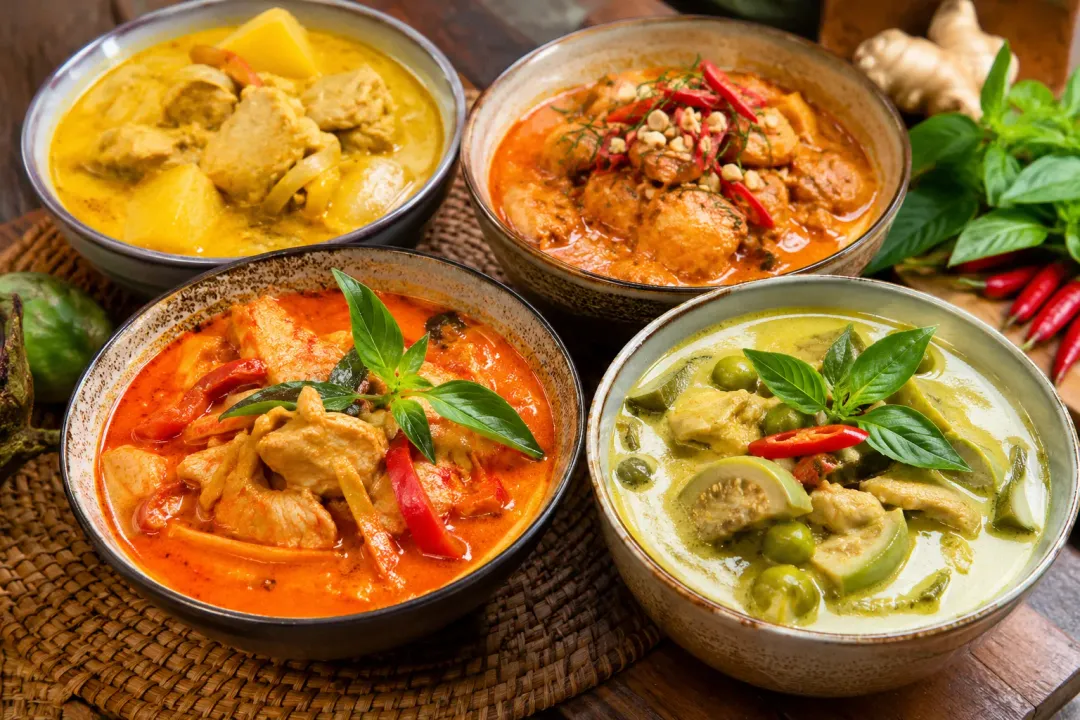
There are several types of Thai chicken curry, including red curry, green curry, yellow curry, and Panang curry. Although they share some ingredients, each one has a different taste and appearance.
Thai chicken curry is easy to recognize because of its combination of creamy coconut milk, aromatic herbs, chili, and tender chicken. It is also a dish that can be changed easily by adding different vegetables or adjusting the level of spice.
What Does Thai Chicken Curry Taste Like?
Thai chicken curry has a rich and layered taste. The exact flavor depends on the type of curry, but most versions have a mixture of spicy, salty, sweet, sour, and savory flavors.
Coconut milk gives the curry a smooth and creamy texture. Curry paste adds most of the main flavor, while ingredients such as fish sauce, lime juice, and sugar help balance the dish.
You may notice a strong herbal aroma from ingredients such as lemongrass, Thai basil, and kaffir lime leaves. Garlic, shallots, ginger, or galangal can also add depth.
The result is a curry that is creamy but not simply sweet or heavy. The different flavors work together in the same dish.
What Is in Thai Chicken Curry?
The ingredients can change depending on the recipe and type of curry, but some ingredients are commonly used.
Chicken
Chicken is the main protein in this curry. Boneless chicken thighs are a popular choice because they stay tender and juicy during cooking. Chicken breast also works well, especially when cooked carefully to prevent it from drying out. Both cuts have their own benefits, so choosing between chicken breasts and thighs comes down to personal preference.
The chicken is usually cut into small pieces so it can absorb the curry sauce.
Coconut Milk
Coconut milk is one of the ingredients that gives Thai chicken curry its creamy texture.
It also helps soften the heat from the chilies and carries the flavors of the curry paste throughout the dish.
Some Thai curries use more coconut milk than others. A curry with more coconut milk will usually have a richer and creamier sauce.
Thai Curry Paste
Curry paste gives the dish its main character.
Thai curry paste is made by combining ingredients such as chilies, garlic, shallots, lemongrass, galangal, lime, and various spices used in Thai food. Different curry pastes use different combinations of ingredients.
Red curry paste, green curry paste, yellow curry paste, and Panang curry paste each create a different result.
Fish Sauce
Fish sauce is commonly used to add saltiness and a deep savory flavor.
You may not notice a strong fish flavor in a finished curry because it is usually used as part of a larger combination of ingredients.
Thai Basil
Thai basil gives the curry a fresh herbal aroma. It is often added toward the end of cooking so that its flavor remains noticeable.
Lime
Lime juice can add a fresh, slightly sour flavor to balance the richness of the coconut milk.
Vegetables
Vegetables depend on the type of curry and the recipe. Common choices include bamboo shoots, eggplant, bell peppers, green beans, potatoes, carrots, and onions.
What Is Thai Red Chicken Curry?
Thai red chicken curry is one of the best-known Thai curry dishes.
It gets its red color mainly from the red chilies used in the curry paste. The paste is combined with coconut milk and cooked with chicken and other ingredients.
A typical red chicken curry may contain:
- Chicken
- Red curry paste
- Coconut milk
- Fish sauce
- Thai basil
- Bamboo shoots
- Bell peppers
- Sugar
- Lime or lime leaves
Red curry usually has a noticeable chili flavor, but its heat can vary. Some versions are quite spicy, while others are relatively mild.
The curry has a rich sauce that goes particularly well with jasmine rice.
What Is Thai Green Chicken Curry?
Thai green chicken curry is made using green curry paste.
The green color comes mainly from fresh green chilies and herbs used in the paste. Green curry can have a fresh and aromatic taste along with a good amount of chili heat.
Common ingredients include chicken, coconut milk, green curry paste, Thai basil, eggplant, bamboo shoots, fish sauce, and lime leaves.
Green curry is often thought to be extremely spicy because of its green color, but the actual heat depends on the recipe and the amount of chili used.
It usually has a strong herbal character and a creamy sauce.
What Is Thai Yellow Chicken Curry?
Thai yellow chicken curry gets its yellow color from ingredients such as turmeric and other spices.
It generally has a warmer and more gentle flavor than many red or green curries. Potatoes and onions are common additions.
Yellow curry can be a good choice for someone who enjoys the flavor of curry but does not want a very hot dish.
The sauce is usually rich and creamy, with the coconut milk helping to create a smooth texture.
What Is Panang Chicken Curry?
Panang chicken curry is another popular type of Thai curry.
It is usually thicker and richer than many other Thai curries. It has a slightly sweet and nutty flavor, and peanuts are commonly associated with Panang curry.
Chicken is cooked in a thick coconut-based sauce made with Panang curry paste and seasonings.
Panang curry can have chili heat, but it is often appreciated more for its rich and creamy flavor.
What Makes Thai Curry Different From Other Curries?
The word “curry” covers many different dishes around the world. Thai curry has its own ingredients and cooking style.
One of the biggest differences is the use of fresh aromatic ingredients in Thai curry paste, which reflect the distinctive flavors of Thai cuisine.
Lemongrass, galangal, kaffir lime, fresh chilies, garlic, and shallots are common ingredients in Thai cooking.
Coconut milk is also frequently used in Thai curries, giving them their creamy texture.
Thai curry also focuses strongly on balance. Spicy chilies are often combined with salty fish sauce, sweet ingredients, and sour lime to create a more rounded flavor.
Is Thai Chicken Curry Spicy?
Thai chicken curry can be spicy, but the spice levels in Thai food vary depending on the dish, ingredients, and preparation.
The level of spice depends on the curry paste, type of chilies, amount of paste, and recipe.
Green curry can be quite spicy, while red curry can range from mild to very hot. Yellow curry is often milder.
Restaurants and home cooks can also change the amount of curry paste used.
If you are making the curry yourself, you can start with a small amount of curry paste and add more if needed.
Why Does Thai Chicken Curry Use Coconut Milk?
Coconut milk gives Thai chicken curry its smooth and creamy texture. It also helps balance the heat of the chilies.
Coconut milk has a natural richness that works well with spicy and aromatic ingredients. When combined with curry paste, it creates a sauce that coats the chicken and vegetables.
It also makes the curry work particularly well with rice. The rice absorbs the sauce and helps balance the stronger flavors.
Is Thai Chicken Curry Sweet?
Thai chicken curry can have some sweetness, but it should not always taste like a sweet dish.
A small amount of sugar may be added to balance the salty, spicy, and sour flavors.
The sweetness can also vary depending on the curry style. Some versions, particularly certain restaurant preparations, may taste noticeably sweeter than others.
The goal is usually to create balance rather than make the curry taste like a dessert.
What Vegetables Go With Thai Chicken Curry?
There are many vegetables that work well in Thai chicken curry.
Some common choices include:
- Bamboo shoots
- Thai eggplant
- Bell peppers
- Potatoes
- Green beans
- Carrots
- Onions
- Zucchini
- Snow peas
Bamboo shoots are particularly common in Thai red and green curries.
Potatoes and onions are often used in yellow curry.
The vegetables can add texture and make the meal more filling.
How to Make Thai Chicken Curry
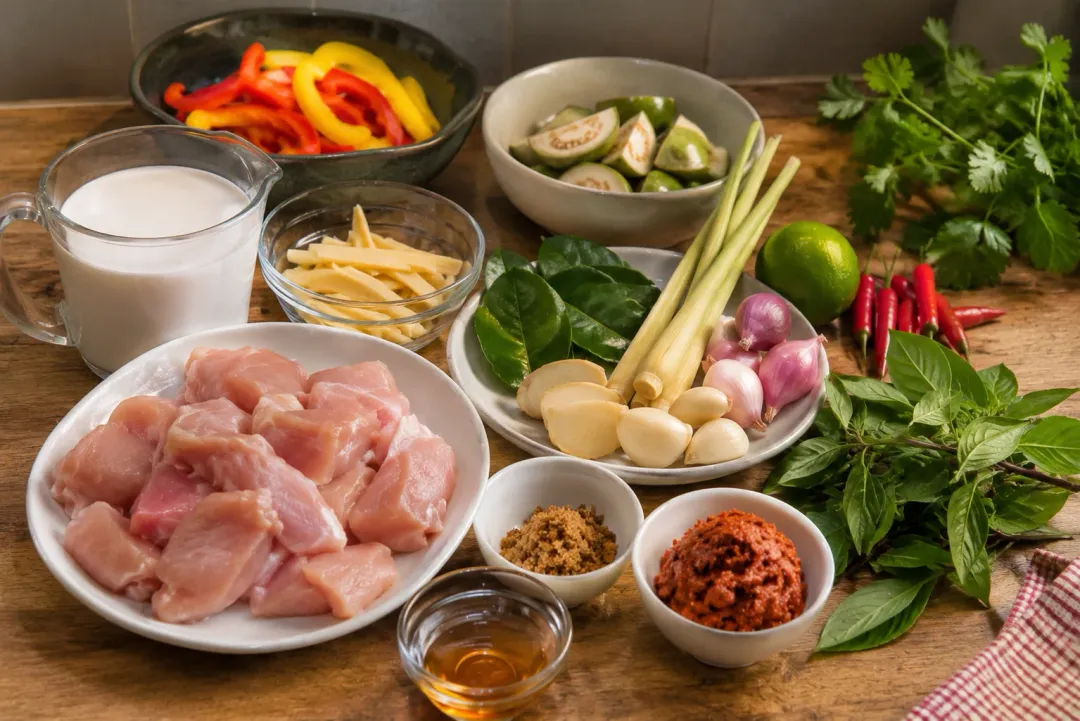
Thai chicken curry is fairly simple to make at home. You can use red, green, or yellow curry paste depending on the flavor you prefer. The recipe below is for a simple Thai red chicken curry.
Ingredients
- 1 lb chicken thighs or chicken breast, cut into bite-sized pieces
- 1 can (13.5 oz) coconut milk
- 2 to 3 tablespoons Thai red curry paste
- 1 tablespoon fish sauce
- 1 teaspoon brown sugar or palm sugar
- 1 cup sliced bell pepper
- 1 cup bamboo shoots
- 1 cup Thai basil leaves
- 1 tablespoon vegetable oil
- 1 teaspoon grated fresh ginger
- 1 tablespoon lime juice
- 1/2 cup water, if needed
- Cooked jasmine rice for serving
Step-by-Step Recipe
Cook the Curry Paste
Heat the oil in a large pan over medium heat. Add the Thai red curry paste and ginger. Cook for about 1 to 2 minutes, stirring frequently.
This helps release the aroma from the curry paste before adding the other ingredients.
Add the Coconut Milk
Pour in about half of the coconut milk and stir it into the curry paste.
Let it simmer for a few minutes until the mixture becomes fragrant and slightly thicker.
Add the Chicken
Add the chicken pieces and stir them into the curry.
Cook for several minutes, turning the pieces occasionally so they cook evenly.
Add the Remaining Ingredients
Pour in the remaining coconut milk. Add the bell pepper and bamboo shoots.
If the curry seems too thick, add a little water.
Let everything simmer until the chicken is fully cooked and the vegetables are tender but still have some texture.
Season the Curry
Add fish sauce and sugar. Stir and taste the curry.
If it needs more brightness, add lime juice. If you want more heat, you can add a little more curry paste.
Add Thai Basil
Turn the heat down and stir in the Thai basil leaves.
Cook for another minute or so until the basil becomes fragrant.
Serve
Serve the curry hot over freshly cooked jasmine rice.
The rice absorbs the creamy curry sauce and helps balance the spicy, salty, and aromatic flavors.
Tips for Making Better Thai Chicken Curry
Don’t add too much curry paste at once. Start with a smaller amount and increase it after tasting.
Use full-fat coconut milk when you want a richer and creamier curry.
Don’t overcook the chicken. Once the chicken is cooked through and tender, it is ready.
Taste before serving. Thai curry is about balance, so adjust the fish sauce, sugar, lime juice, and curry paste according to the flavor you want.
Add fresh basil at the end. This keeps its aroma more noticeable in the finished curry.
Can Thai Chicken Curry Be Made at Home?
Yes, Thai chicken curry is a practical dish to make at home.
Making curry paste from scratch gives you more control over the flavor, but ready-made Thai curry paste can also be used.
For a simple homemade curry, you need chicken, curry paste, coconut milk, vegetables, and a few seasonings.
The main thing to remember is to taste the curry while cooking. You may need more salt, sweetness, acidity, or curry paste depending on the ingredients.
This makes Thai chicken curry easy to adjust to your own preference.
What Rice Is Served With Thai Chicken Curry?
Jasmine rice is one of the most common choices.
Its soft texture and delicate aroma work well with the rich curry sauce. The rice also absorbs the sauce, making each bite more flavorful.
Sticky rice may be served with some Thai dishes, particularly in northern and northeastern Thailand, but jasmine rice is a common pairing for coconut-based curries.
Rice noodles can also be used with certain Thai curry dishes.
Can Thai Chicken Curry Be Made Without Coconut Milk?
Yes, but the result will be different.
Coconut milk is a major part of many Thai chicken curries, so removing it changes the texture and flavor.
Some Thai curry styles are naturally made without coconut milk. These can have a thinner, more soup-like consistency and rely more heavily on herbs, spices, chilies, and other ingredients for flavor.
If you are looking for a creamy Thai chicken curry, coconut milk is usually an important ingredient.
Can You Make Thai Chicken Curry Less Spicy?
Yes.
The simplest way is to use less curry paste or choose a curry paste with a lower level of heat.
You can also use more coconut milk to soften the overall intensity.
Adding more vegetables and chicken can also spread the curry paste across a larger amount of food.
However, it is better to adjust the spice gradually. Once you make a curry extremely hot, adding more ingredients to balance it can change the entire dish.
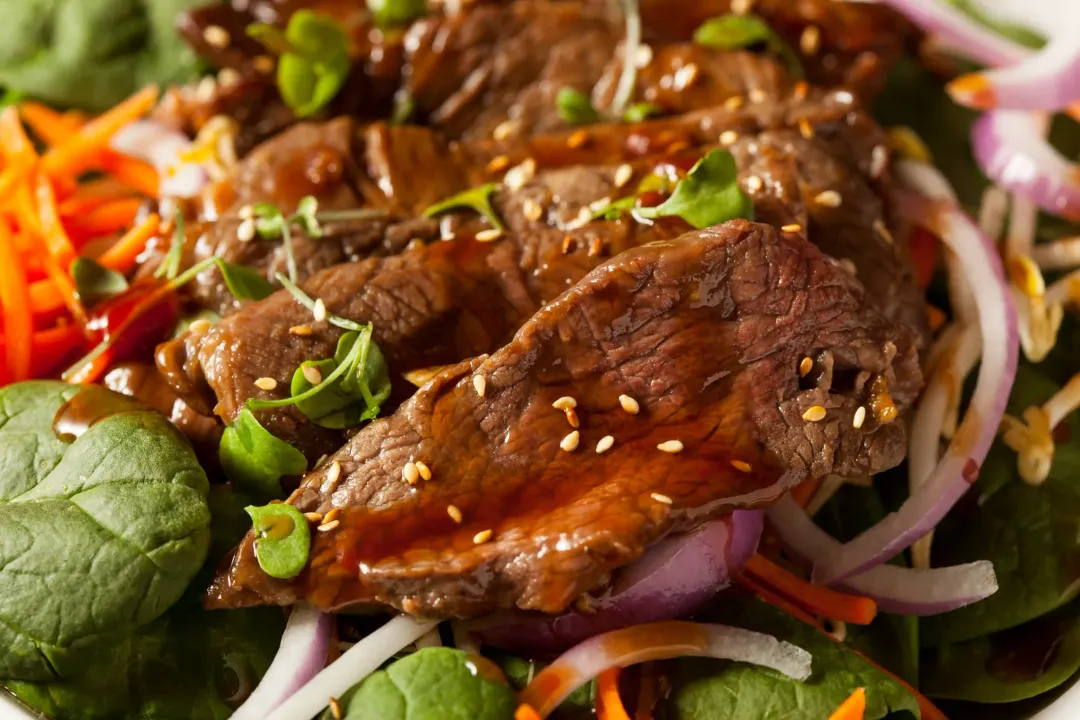
Can Thai Chicken Curry Be Made With Other Meat?
Yes.
Although chicken is very popular, Thai curry can be made with many different proteins.
Depending on the curry, you may find versions made with:
- Beef
- Pork
- Shrimp
- Fish
- Duck
- Tofu
Vegetarian versions can also be made using tofu and vegetables.
The curry paste and sauce can remain similar while the main protein changes.
Is Thai Chicken Curry Healthy?
Thai chicken curry can be part of a balanced meal.
Chicken provides protein, while vegetables add fiber and important nutrients.
However, coconut milk can be rich and relatively high in calories and saturated fat. Some recipes can also contain a significant amount of salt or sugar.
The nutritional value depends on how the curry is prepared and how much is eaten.
Adding plenty of vegetables and serving a reasonable amount of curry with rice can make it a satisfying meal.
How Long Does Thai Chicken Curry Last?
Cooked Thai chicken curry should be stored in the refrigerator if you are not eating it immediately.
As a general food safety guideline, cooked leftovers can usually be kept refrigerated for around 3 to 4 days when stored properly.
Keep the curry in a covered container and refrigerate it promptly.
If you notice an unusual smell, appearance, or texture, it is safer not to eat it.
Can Thai Chicken Curry Be Frozen?
Yes, Thai chicken curry can be frozen.
Store it in an airtight, freezer-safe container and allow it to cool appropriately before freezing.
After freezing and thawing, coconut milk sauces can sometimes separate slightly. This does not necessarily mean the curry has gone bad.
Reheat it gently and stir the sauce well before serving.
Freezing is particularly useful when you make a larger batch and want to save some for another meal.
What Is the Best Part of Thai Chicken Curry?
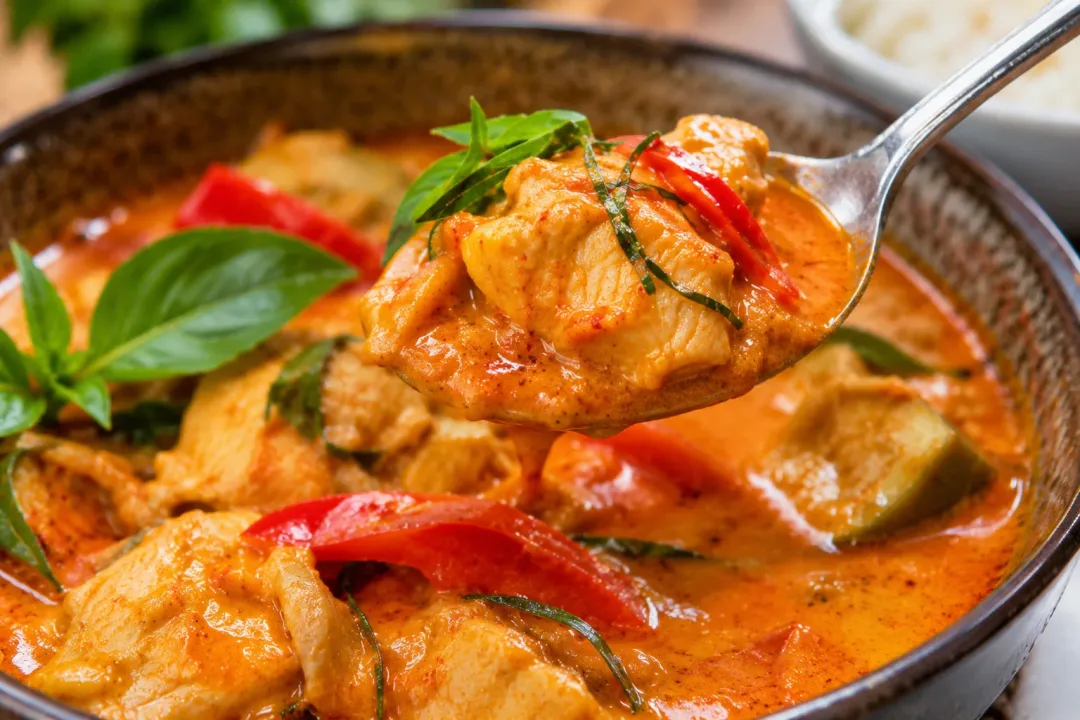
For many people, the best part is the sauce.
The combination of coconut milk and curry paste creates a rich base, while herbs, chilies, fish sauce, lime, and other seasonings add layers of flavor.
The chicken absorbs some of the sauce as it cooks, and the rice brings everything together.
A good Thai chicken curry does not need to be extremely spicy to be flavorful. The best versions focus on getting the different flavors to work together.
Conclusion
Thai chicken curry is a flavorful dish that combines chicken, Thai curry paste, coconut milk, herbs, seasonings, and vegetables into a rich and aromatic meal.
There are several types to choose from. Red curry has a deep chili flavor, green curry is fresh and herbal, yellow curry is warm and usually milder, and Panang curry is thick, rich, and slightly nutty.
What makes Thai chicken curry special is the balance of flavors. The heat from chilies is combined with sweetness, saltiness, sourness, and the richness of coconut milk.
It is also a flexible dish. You can change the vegetables, adjust the spice level, choose chicken breast or thighs, or even use another protein. Serve it with jasmine rice, and you have a simple and satisfying meal.
At its heart, Thai chicken curry is all about rich coconut sauce, aromatic curry paste, tender chicken, fresh herbs, and balanced flavors. Whether you order it at a Thai restaurant or make it at home, there are plenty of versions to try.
Frequently Asked Questions
Is Thai Chicken Curry Traditionally Made With a Specific Type of Chicken?
There is no single required cut, but boneless chicken thighs are a popular choice because they stay tender and absorb the curry sauce well.
Can Thai Chicken Curry Be Made Without Fish Sauce?
Yes. Fish sauce can be replaced with soy sauce, tamari, or another savory seasoning. The taste will be slightly different from traditional Thai curry.
Is Thai Curry Paste Always Vegetarian?
No. Some prepared curry pastes contain shrimp paste or other seafood ingredients. Check the ingredient label carefully if you are avoiding animal products or have a seafood allergy.
Can I Use Homemade Thai Curry Paste?
Yes. Homemade curry paste can give the dish a fresher and more aromatic flavor. It also allows you to control the chilies, herbs, and spices.
What Can I Do If My Thai Curry Is Too Salty?
Add more unsalted coconut milk or a small amount of water to dilute the saltiness. You can then adjust the other flavors gradually.
Why Does My Thai Curry Look Watery?
The curry may contain too much liquid or may not have simmered long enough. Letting it cook uncovered for a few minutes can help reduce excess liquid.
Can I Use Coconut Cream Instead of Coconut Milk?
Yes, but coconut cream is thicker and richer. If you use it, you may need to adjust the amount of liquid to get the consistency you want.
What Gives Thai Curry Its Fresh Aroma?
Fresh ingredients such as lemongrass, galangal, Thai basil, lime leaves, garlic, and shallots contribute much of the distinctive aroma found in Thai curry.
Can Thai Chicken Curry Be Prepared Ahead of Time?
Yes. Preparing it ahead can allow the flavors to develop further. Reheat it gently and adjust the consistency with a little coconut milk or water if needed.
What Can I Serve With Thai Chicken Curry Besides Rice?
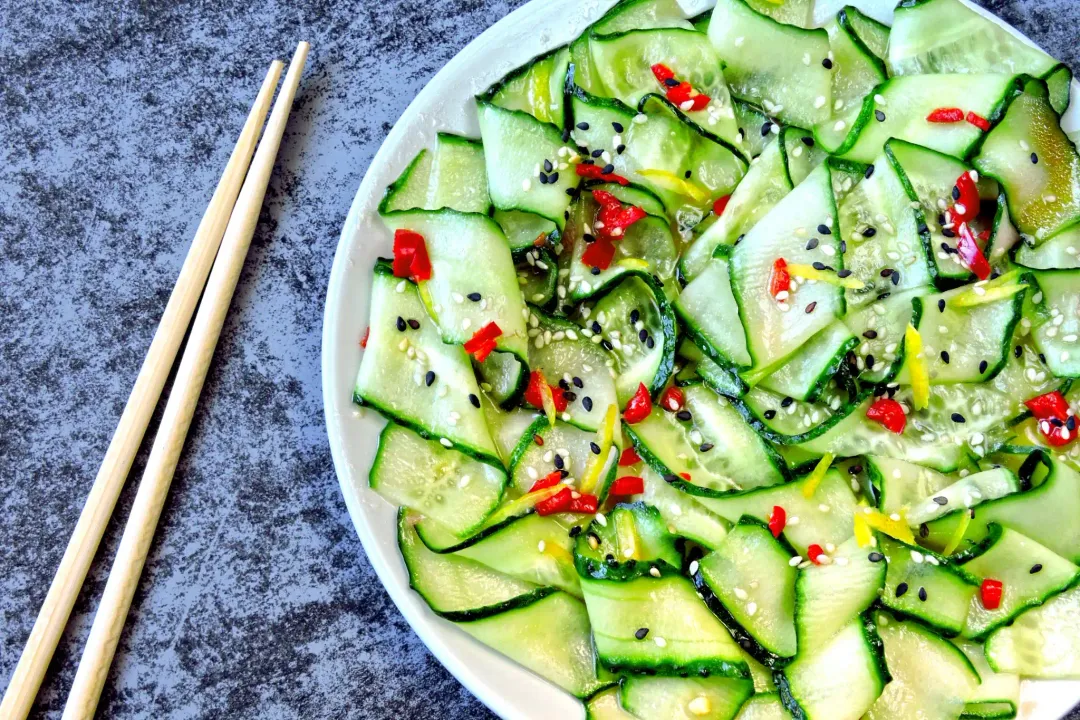
Thai chicken curry can also be served with roti, rice noodles, or other Thai side dishes. Fresh vegetables or a light salad can also complement the richness of the curry.