Thai food is known for its bold flavors, fresh ingredients, and comforting dishes. Among the many popular meals found across Thailand, Thai boat noodles stand out for their rich broth, tender meat, and unique history. Although they were once sold from small boats floating along canals, today they can be enjoyed in restaurants around the world.
If you have never tried Thai boat noodles, you may wonder what makes them different from other noodle soups. The answer lies in their deep, flavorful broth, carefully balanced seasonings, and traditional cooking methods.
In this guide, you will learn everything you need to know about Thai boat noodles, including their history, ingredients, taste, different variations, and why they continue to be one of Thailand’s most loved street foods.
What Are Thai Boat Noodles?
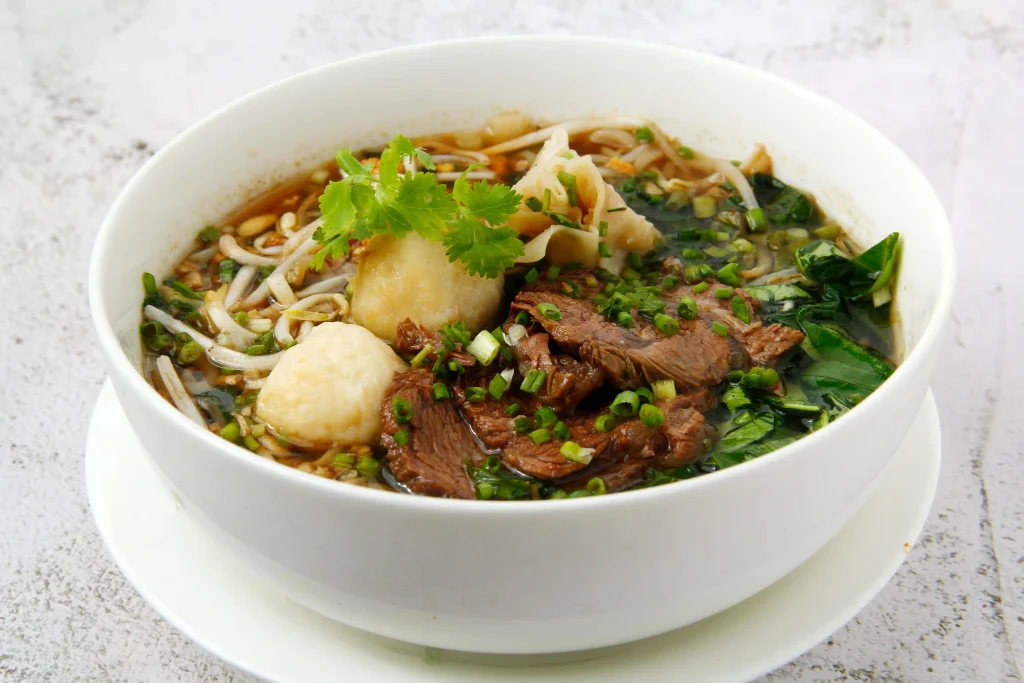
Thai boat noodles, known in Thailand as Kuay Teow Ruea, are a traditional Thai noodle soup made with a rich, savory broth, noodles, meat, fresh herbs, and flavorful seasonings.
Unlike many noodle soups that have a light broth, boat noodles are famous for their darker, more concentrated soup that is packed with layers of flavor.
The dish is usually served in small bowls, encouraging people to enjoy multiple servings in one meal.
Why Are They Called Boat Noodles?
The name comes from the way the noodles were originally sold.
Many years ago, vendors prepared and sold these noodles from small wooden boats that traveled through Thailand’s rivers and canals. Customers would buy bowls directly from the boats without leaving the shore.
Serving the noodles in small bowls made them easier to hand over without spilling while the boats floated on the water.
Although most people now eat boat noodles in restaurants or food markets, the traditional name has remained.
The History of Thai Boat Noodles
Boat noodles have been part of Thai street food culture for generations.
Before modern roads became common, canals were an important way to travel and transport goods throughout central Thailand. Food vendors used boats as mobile kitchens, serving freshly made meals to people living and working near the waterways.
Because space on the boats was limited, recipes focused on simple ingredients that delivered bold flavors. Over time, the recipe became more refined, creating the rich and comforting noodle soup people enjoy today.
Today, boat noodles remain one of Thailand’s most famous street foods and are enjoyed by both locals and visitors.
What Makes Thai Boat Noodles Different?
Several features make boat noodles unique compared to other noodle soups.
Rich Broth
The broth is the heart of the dish.
It is slowly simmered with herbs, spices, and seasonings until it develops a deep, rich flavor.
Unlike clear noodle soups, boat noodle broth is darker, thicker, and more concentrated.
Balanced Flavors
Thai cuisine is famous for balancing several flavors in every dish.
Boat noodles combine:
- Savory
- Salty
- Sweet
- Slightly spicy
- Mildly sour
Each spoonful offers a combination of flavors rather than just one dominant taste.
Small Portions
Traditional boat noodles are served in smaller bowls than many other noodle soups.
Instead of ordering one large serving, many people enjoy two or three bowls with different meats or noodle types.
Fresh Herbs
Fresh herbs add brightness and freshness that balance the rich broth.
Common herbs include cilantro, green onions, and Thai basil.
What Ingredients Are Used in Thai Boat Noodles?
Recipes vary slightly from one restaurant to another, but several ingredients are commonly used.
Noodles
Different noodle types may be used, including:
- Thin rice noodles
- Medium rice noodles
- Wide rice noodles
- Egg noodles in some variations
The type of noodle changes the texture but not the overall character of the dish.
Meat
Boat noodles are commonly prepared with:
- Beef
- Pork
- Beef meatballs
- Pork meatballs
Some restaurants offer chicken or seafood versions, although these are less traditional.
Broth
The broth is made by slowly simmering ingredients to develop rich flavor.
Common ingredients include:
- Beef or pork stock
- Soy sauce
- Dark soy sauce
- Garlic
- Cinnamon
- Star anise
- Coriander root
- White pepper
Many traditional recipes also include pig’s blood or cow’s blood to give the broth a richer texture and deeper color. While this is part of the authentic recipe, many restaurants outside Thailand leave it out or offer alternative versions.
Fresh Toppings
Popular toppings include:
- Bean sprouts
- Cilantro
- Green onions
- Fried garlic
- Crispy pork skin
- Thai basil
These toppings add texture and freshness to every bowl.
Condiments Served on the Side
One of the best parts of eating Thai boat noodles is customizing the flavor.
Restaurants often provide condiments such as:
- Chili flakes
- Vinegar with sliced chilies
- Fish sauce
- Sugar
Each person can adjust the taste to match their preference.
What Do Thai Boat Noodles Taste Like?
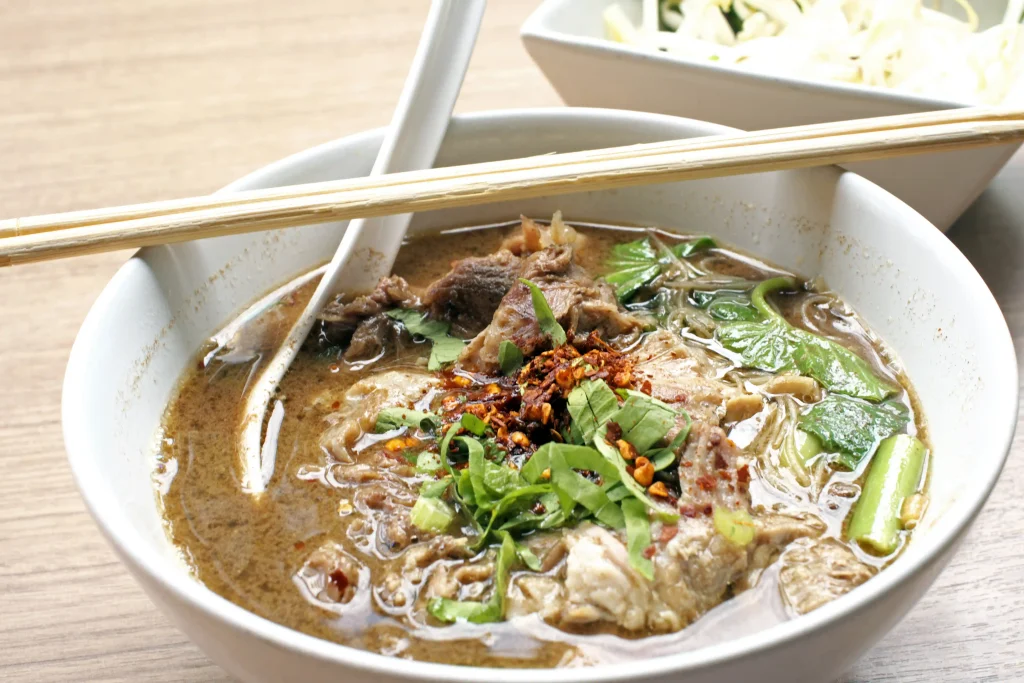
Thai boat noodles have a rich and complex flavor.
The broth is deeply savory with hints of sweetness and spice. Fresh herbs brighten the dish, while the noodles absorb the flavorful soup.
Depending on the recipe, you may also notice mild notes of cinnamon, star anise, garlic, and pepper.
If chili is added, the soup develops a pleasant heat that complements the rich broth instead of overpowering it.
For many people, the combination of bold flavors is what makes boat noodles so memorable.
Are Thai Boat Noodles Spicy?
Not always.
The broth itself is usually mildly seasoned, allowing diners to control the spice level by adding chili flakes or fresh chilies.
This makes boat noodles suitable for both people who enjoy spicy food and those who prefer milder flavors.
Why Is the Broth So Dark?
The dark color comes from ingredients such as dark soy sauce and the long cooking process.
In traditional recipes, animal blood also contributes to the darker appearance and richer texture.
Modern restaurants often achieve a similar color using seasonings without including blood.
Are Thai Boat Noodles Healthy?
Like most meals, it depends on the ingredients and portion size.
Boat noodles provide:
- Protein from meat
- Carbohydrates from noodles
- Vitamins from herbs and vegetables
However, the broth can be high in sodium because of sauces and seasonings.
Choosing lean meat, adding extra vegetables, and enjoying moderate portions can help create a more balanced meal.
Different Types of Thai Boat Noodles
Although the traditional recipe remains popular, there are several variations of Thai boat noodles. Different regions and restaurants may prepare the dish slightly differently while keeping the rich broth as the main feature.
Beef Boat Noodles
Beef boat noodles are one of the most traditional versions.
They usually include:
- Thin slices of beef
- Beef meatballs
- Rice noodles
- Rich beef broth
- Fresh herbs
The slow-cooked beef becomes tender and absorbs the flavors of the broth.
Pork Boat Noodles
Pork boat noodles are another favorite throughout Thailand.
They often include:
- Sliced pork
- Pork meatballs
- Rice noodles
- Bean sprouts
- Green onions
The broth has the same rich flavor but with a slightly different taste from the pork stock.
Chicken Boat Noodles
Some restaurants serve chicken as an alternative for guests who do not eat beef or pork.
The broth may be slightly lighter, but it still includes many of the traditional Thai seasonings.
Seafood Boat Noodles
Although less common, seafood versions use shrimp, fish, or squid while maintaining the signature noodle soup style.
How Are Thai Boat Noodles Traditionally Served?
One thing that surprises many first-time visitors is the serving size.
Boat noodles are usually served in small bowls rather than large ones. This tradition dates back to the days when vendors sold them from boats, making the bowls easier to handle and pass to customers.
Today, many people order several bowls during one meal.
This allows them to:
- Try different meats
- Compare noodle types
- Adjust seasoning in each bowl
- Enjoy a variety of flavors
It is common to see stacks of empty bowls on restaurant tables after a meal.
What Noodles Are Best for Boat Noodles?
Several noodle types work well, and each offers a different texture.
Thin Rice Noodles
These are one of the most traditional choices.
They absorb the broth well and provide a soft texture.
Medium Rice Noodles
These noodles are slightly thicker and have a chewy bite.
They are a popular option in many restaurants.
Wide Rice Noodles
Wide noodles create a heartier meal and hold more broth in every bite.
Egg Noodles
Some restaurants offer egg noodles for a richer texture and flavor.
What Side Dishes Are Often Served?
Boat noodles are often enjoyed with small side dishes that complement the rich broth.
Popular choices include:
- Crispy pork skin
- Fresh vegetables
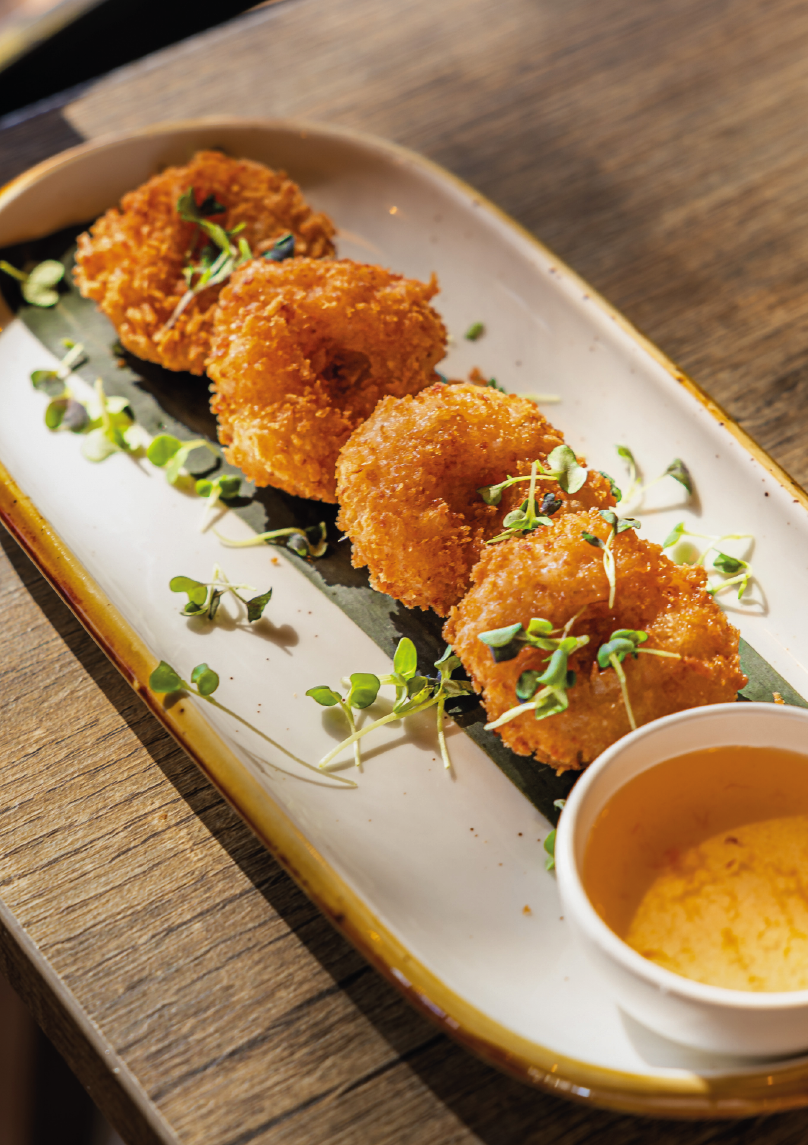
- Thai fried wontons
- Boiled vegetables
- Thai iced tea
- Fresh herbal drinks
These additions create a complete and satisfying meal.
How Do You Eat Thai Boat Noodles?
Eating boat noodles is simple, but there are a few traditions that make the experience even better.
Taste the Broth First
Before adding any extra seasoning, take a spoonful of the broth.
This lets you enjoy the chef’s original balance of flavors.
Adjust the Seasoning
If you like stronger flavors, you can add:
- Chili flakes for heat
- Fish sauce for saltiness
- Vinegar with chilies for acidity
- A small amount of sugar for sweetness
Add small amounts at a time until the flavor suits your taste.
Eat While Hot
Boat noodles are best enjoyed immediately after they are served.
The noodles remain tender, and the broth stays rich and aromatic.
Are Thai Boat Noodles Gluten Free?
It depends on the ingredients.
Rice noodles are naturally gluten free, but many sauces used in the broth may contain wheat.
If you have gluten sensitivity or celiac disease, ask the restaurant whether gluten-free soy sauce or other alternatives are used.
Can Vegetarians Eat Thai Boat Noodles?
Traditional boat noodles are made with meat-based broth, so they are not vegetarian.
However, many modern Thai restaurants now offer vegetarian versions made with:
- Vegetable broth
- Tofu
- Mushrooms
- Soy-based protein
- Fresh vegetables
These versions keep many of the classic Thai flavors while avoiding meat.
Can You Make Thai Boat Noodles at Home?
Yes. While the authentic broth takes time to prepare, home cooks can make delicious boat noodles with a little planning.
Basic ingredients include:
- Rice noodles
- Beef or pork broth
- Soy sauce
- Garlic
- Star anise
- Cinnamon
- White pepper
- Fresh herbs
- Bean sprouts
- Meat or tofu
The broth is the most important part of the recipe. Simmering it slowly allows the flavors to develop fully.
Tips for Making Better Boat Noodles
If you plan to cook them at home, these tips can help.
Use Quality Broth
A rich broth creates the best flavor.
Allow it to simmer slowly instead of rushing the process.
Cook Noodles Separately
Avoid overcooking the noodles.
Prepare them separately and add them to the serving bowl before pouring the hot broth over them.
Add Fresh Herbs Last
Fresh herbs should be added just before serving to keep their bright flavor and aroma.
Taste Before Serving
The broth should have a balance of savory, salty, slightly sweet, and mildly spicy flavors.
Adjust the seasoning gradually.
Are Boat Noodles Popular Outside Thailand?
Yes.
Thai restaurants around the world now include boat noodles on their menus.
While recipes may be adjusted to match local tastes, the rich broth and tender noodles remain the defining features of the dish.
Many people discover boat noodles after trying other Thai favorites like Pad Thai or Tom Yum soup and quickly become fans of their bold flavor.
Boat Noodles vs Regular Noodle Soup
Although both are noodle soups, there are several important differences.
| Thai Boat Noodles | Regular Noodle Soup |
| Rich, concentrated broth | Often lighter broth |
| Traditionally served in small bowls | Usually served in larger portions |
| Strong balance of Thai flavors | Flavor depends on cuisine |
| Often includes herbs and multiple seasonings | May have simpler seasoning |
| Originally sold from boats | Served in many different settings |
Why Do People Love Thai Boat Noodles?
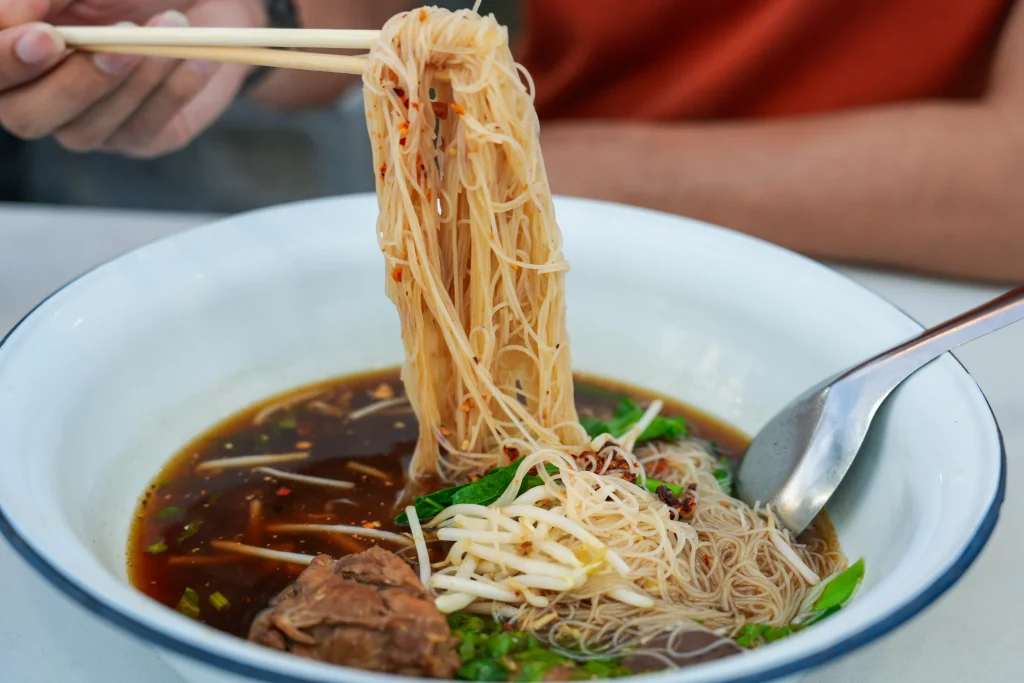
Boat noodles have remained popular for generations because they offer a unique combination of flavor, tradition, and comfort.
People enjoy them because they:
- Have a rich and satisfying broth
- Offer balanced Thai flavors
- Can be customized with condiments
- Are served in fun, small portions
- Pair well with many side dishes
- Represent an important part of Thai street food culture
For many travelers, trying authentic boat noodles is one of the highlights of visiting Thailand.
FAQs About Thai Boat Noodles
Do Thai boat noodles always contain blood?
No. Traditional recipes often include animal blood to enrich the broth, but many modern restaurants leave it out or offer versions without it.
Why are boat noodles served in small bowls?
They were originally sold from boats, where smaller bowls were easier to prepare, carry, and hand to customers. Today, the tradition continues because many people enjoy eating multiple bowls.
What meat is most commonly used in boat noodles?
Beef and pork are the two most traditional choices. Many restaurants also offer chicken or vegetarian alternatives.
Can I make boat noodles less spicy?
Yes. The broth is usually only mildly spicy. You can simply avoid adding extra chili or ask for a mild version.
Are Thai boat noodles filling?
Yes. Even though each bowl is small, many people order two or three servings, making for a satisfying meal.
What drink pairs well with Thai boat noodles?
Thai iced tea, iced coffee, fresh coconut water, or herbal drinks are all popular choices that complement the rich flavors of the noodles.
Are boat noodles suitable for children?
Yes, as long as the spice level is adjusted. Many restaurants can prepare a mild version without added chili.
Can I store leftover boat noodles?
Yes. Store the broth and noodles separately in the refrigerator and consume them within two days for the best taste and texture.
Conclusion
Thai boat noodles are much more than a bowl of noodle soup. They are a classic Thai dish with a rich history, deep flavors, and a unique way of serving that has been enjoyed for generations. Their savory broth, tender meat, fresh herbs, and perfectly cooked noodles create a comforting meal that is both satisfying and full of character.
Whether you try them from a street food vendor, enjoy them at an authentic Thai restaurant, or make them at home, Thai boat noodles offer a delicious taste of Thailand’s culinary tradition. If you are looking to explore beyond the most common Thai dishes, boat noodles are a flavorful choice that is well worth trying.
If you are visiting Orlando, live in the area, or simply want to enjoy authentic Thai cuisine, Lim Ros Thai Restaurant is a great place to experience traditional Thai flavors. From rich noodle dishes to classic Thai favorites, every meal is prepared with fresh ingredients and authentic recipes, giving you a true taste of Thailand right in Orlando.