Pad Thai is one of the most loved Thai dishes in the world. Its mix of sweet, salty, sour, and spicy flavors makes it unforgettable. With chewy rice noodles, tender protein, crunchy vegetables, and that signature tangy sauce, it’s a meal that delights nearly everyone.
But one question comes up often, especially among people with allergies or specific dietary needs: Does Pad Thai have peanuts?
The short answer is yes, traditional Pad Thai contains peanuts, but let’s take a closer look at why they’re used, how they fit into the recipe, and what you can do if you prefer a peanut-free version.
What Is Pad Thai?
Pad Thai is a stir-fried noodle dish that originated in Thailand in the mid-20th century. It became popular during a time when the Thai government encouraged people to eat rice noodles as a national dish. Since then, Pad Thai has become a symbol of Thai cuisine across the world.
It’s usually made with:
- Flat rice noodles (soft and chewy)
- Protein, such as shrimp, chicken, tofu, or a mix of them
- Eggs, scrambled and mixed into the noodles
- Bean sprouts and green onions for crunch
- Tamarind-based sauce for that iconic tangy-sweet flavor
- Lime wedges for a burst of freshness
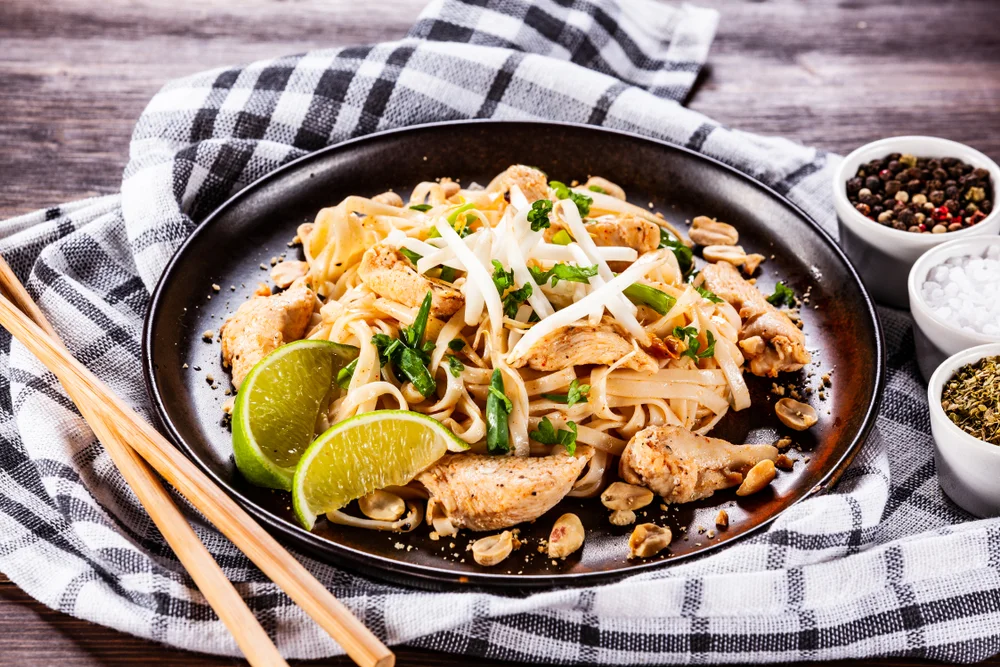
- Crushed roasted peanuts sprinkled on top
Pad Thai offers a balance of tastes and textures, it’s slightly sweet, salty, sour, and nutty all at once. The peanuts are a key part of that final flavor combination.
Why Peanuts Are Used in Pad Thai
In traditional Thai cooking, peanuts add texture, aroma, and depth. Thai cuisine focuses on balancing all five flavors: salty, sweet, sour, spicy, and bitter. Peanuts help achieve that balance by adding a mild nuttiness and crunch to every bite.
Here’s what peanuts bring to Pad Thai:
- Crunch and contrast: The soft noodles and eggs pair beautifully with the crispiness of crushed peanuts.
- Nutty flavor: Roasted peanuts enhance the richness of the dish and balance the sweetness of the sauce.
- Visual appeal: A sprinkle of golden peanuts on top makes Pad Thai look as good as it tastes.
Peanuts are usually added as a garnish rather than cooked into the sauce. This means you can easily skip them if needed.
When Peanuts Are Not Used
Although peanuts are traditional, not every Pad Thai recipe includes them. Some modern or fusion restaurants may choose to omit peanuts altogether, especially in allergy-sensitive kitchens.
You might also find versions that use cashews or almonds instead of peanuts to give a similar crunch with a slightly different flavor.
Vegetarian or vegan restaurants sometimes skip nuts entirely and use toasted sesame seeds or fried garlic flakes as a safer, nut-free alternative.
How Peanuts Are Used in Pad Thai
In most authentic recipes, peanuts are used in two ways:
- Crushed peanuts sprinkled on top: This is the most common method. The peanuts are lightly roasted, chopped or crushed, and added just before serving.
- Mixed into the sauce (less common): Some variations use a small amount of ground peanut powder mixed into the tamarind sauce to deepen the flavor.
Most of the time, the peanuts are optional and served on the side in Thai restaurants. If you do not want peanuts, you can simply ask your server to leave them off the dish.
Can You Order Pad Thai Without Peanuts?
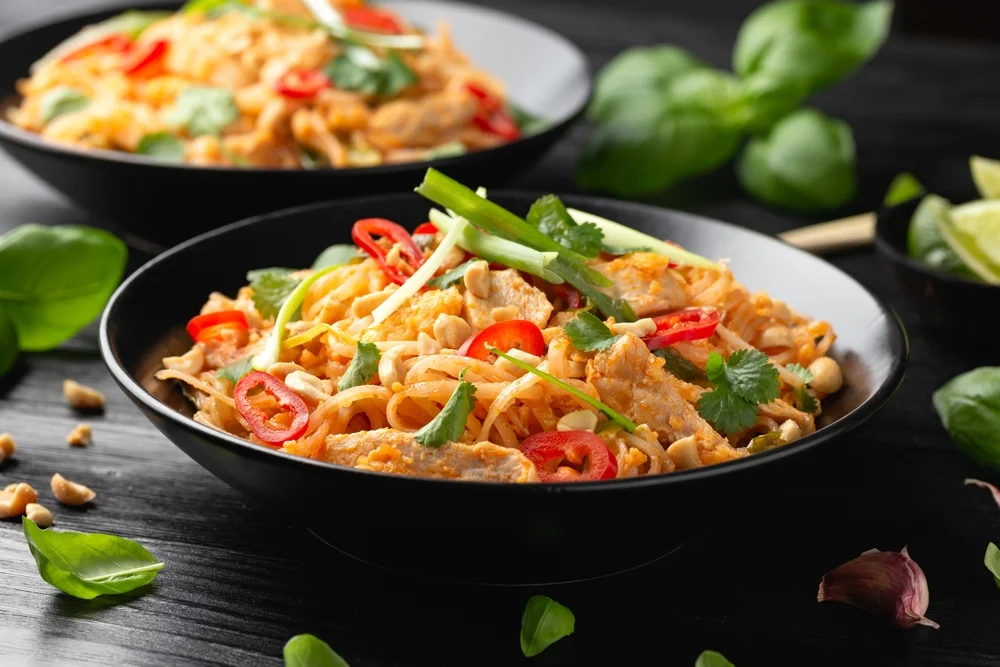
Yes, you absolutely can. In fact, most restaurants will happily make Pad Thai without peanuts if you ask.
When ordering, simply say:
“No peanuts, please.”
If you have a severe peanut allergy, be sure to tell your server that cross-contact is a concern. Since Thai cooking often uses peanuts in multiple dishes, it is best to confirm that:
- The kitchen uses clean utensils and pans.
- The peanuts are stored separately.
- No peanut oil is used in cooking.
Authentic Pad Thai is usually made with vegetable oil, not peanut oil, but it is always good to ask if you are sensitive or allergic.
Peanut-Free Substitutes for Pad Thai
If you love Pad Thai but cannot eat peanuts, there are several great substitutes that mimic the same crunch and flavor balance. Here are some of the best options:
1. Toasted Sesame Seeds
These add a nutty aroma and delicate crunch. They blend beautifully with the tangy tamarind sauce.
2. Sunflower Seeds
These seeds are a safe, nut-free option with a similar texture to peanuts.
3. Fried Garlic or Shallots
Crispy fried garlic or shallots add crunch and an extra layer of savory flavor that pairs perfectly with noodles.
4. Crushed Pretzels or Crispy Rice Noodles
For those who just want to crunch, these are fun, creative alternatives.
5. Roasted Chickpeas
For extra protein and crunch, crushed roasted chickpeas are a great peanut replacement. These alternatives make it easy to enjoy Pad Thai even if you are avoiding peanuts.
What About Pad Thai Sauce – Does It Contain Peanuts?
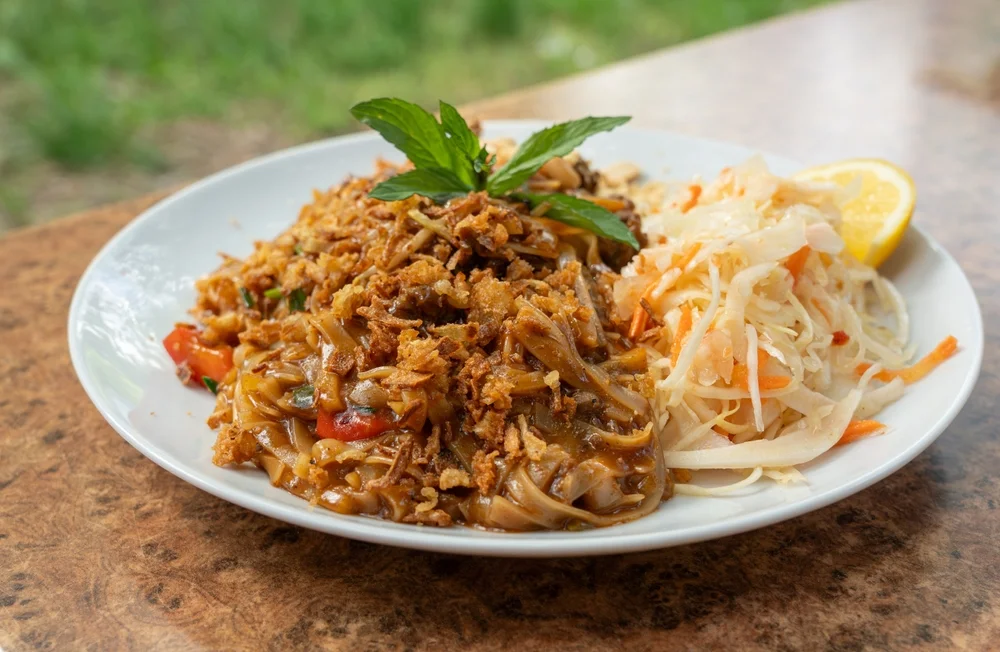
The sauce used in traditional Pad Thai does not contain peanuts. It’s made from a mixture of:
- Tamarind paste for sourness
- Palm sugar or brown sugar for sweetness
- Fish sauce or soy sauce for saltiness
- A touch of chili for spice
This means the only part of the dish that contains peanuts is usually the garnish, which makes it easy to remove or substitute.
How to Make Peanut-Free Pad Thai at Home
If you are cooking at home, it’s easy to make a delicious peanut-free version. Here’s a simple method:
Ingredients
- 6 ounces rice noodles
- 2 tablespoons vegetable oil
- 2 eggs
- 1 cup bean sprouts
- 1/2 cup green onions, chopped
- 1/2 cup tofu, shrimp, or chicken (optional)
- 2 tablespoons tamarind paste
- 2 tablespoons soy sauce or fish sauce
- 1 tablespoon brown sugar
- 1/2 lime
- A handful of toasted sesame seeds or crispy garlic for topping
Instructions
- Soak the rice noodles in warm water until soft, then drain.
- In a large pan or wok, heat the oil and cook your chosen protein.
- Push it to one side and scramble the eggs.
- Add noodles, tamarind paste, soy sauce, and brown sugar. Stir well.
- Mix in bean sprouts and green onions.
- Serve hot with a squeeze of lime and your peanut-free topping of choice.
This recipe keeps the authentic flavor of Pad Thai while making it safe for those avoiding peanuts.
Does Pad Thai Have Peanuts?
So, does Pad Thai have peanuts? Yes, traditional Pad Thai usually includes peanuts as a topping. The good news is that they are added at the end rather than cooked into the sauce, so you can easily ask for your Pad Thai without peanuts or request a safe substitute. That means you do not have to miss out on this flavorful and iconic Thai dish.
If you live in Orlando, are visiting the city, or live nearby, Lim Ros Thai Restaurant is a wonderful place to enjoy authentic Thai food. Located in Maitland, just a short drive from downtown Orlando or Winter Park, Lim Ros Thai offers freshly prepared dishes made with quality ingredients and balanced flavors. Our Pad Thai is cooked to perfection, and the friendly staff can customize your order to suit your preferences, including preparing it without peanuts if needed.
Whether you are dining in, taking out, or exploring Thai cuisine for the first time, Lim Ros Thai Restaurant provides a warm, welcoming experience and unforgettable flavors that keep guests coming back.